

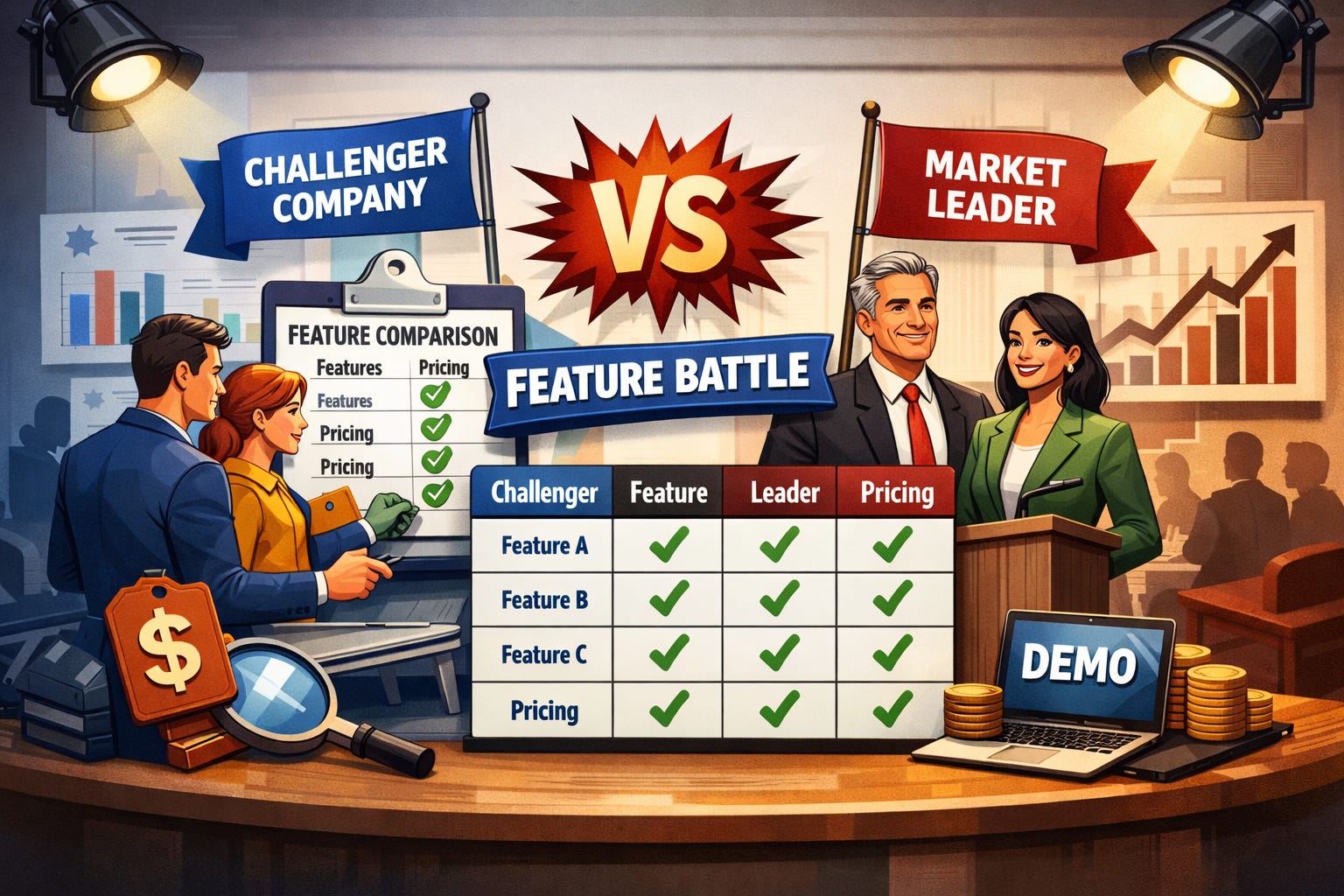
I have been thinking a lot about how deals are won, especially when you are a perceived challenger in the category versus a leader.
When you are not the default option or the perceived category leader, pressure shows up early. Buyers want comparisons. Features enter the conversation faster than planned. Pricing gets examined sooner. This is not because challenger teams do not care about outcomes. Everyone wants outcomes. However, the focus often shifts to outshining the category leader in the competitive process.
That focus can create risk for the future. Deals may close on features or price, but without explicit clarity on goals, the foundation is weak. Later, when priorities shift or adoption slows, these deals struggle. The reality is that market leaders often get more patience, while challengers do not.
This is why outcome-led deal design becomes critical when you are not leading the category.
The strongest teams slow the conversation down early. They make customer goals explicit. They define what success looks like before leaning into features. Features then reinforce the outcome instead of carrying the deal on their own.
Features help you win attention. Outcomes help you earn durability.